
Open Bayesian research
prioritisation stability for robust prioritisation.
Habnetic identifies which prioritisation decisions remain reliable under uncertainty, and where additional review is actually needed.
Urban risk prioritisation is often presented as a single fixed ranking. Habnetic estimates which decisions remain reliable once uncertainty is propagated through the model.
Baseline case study
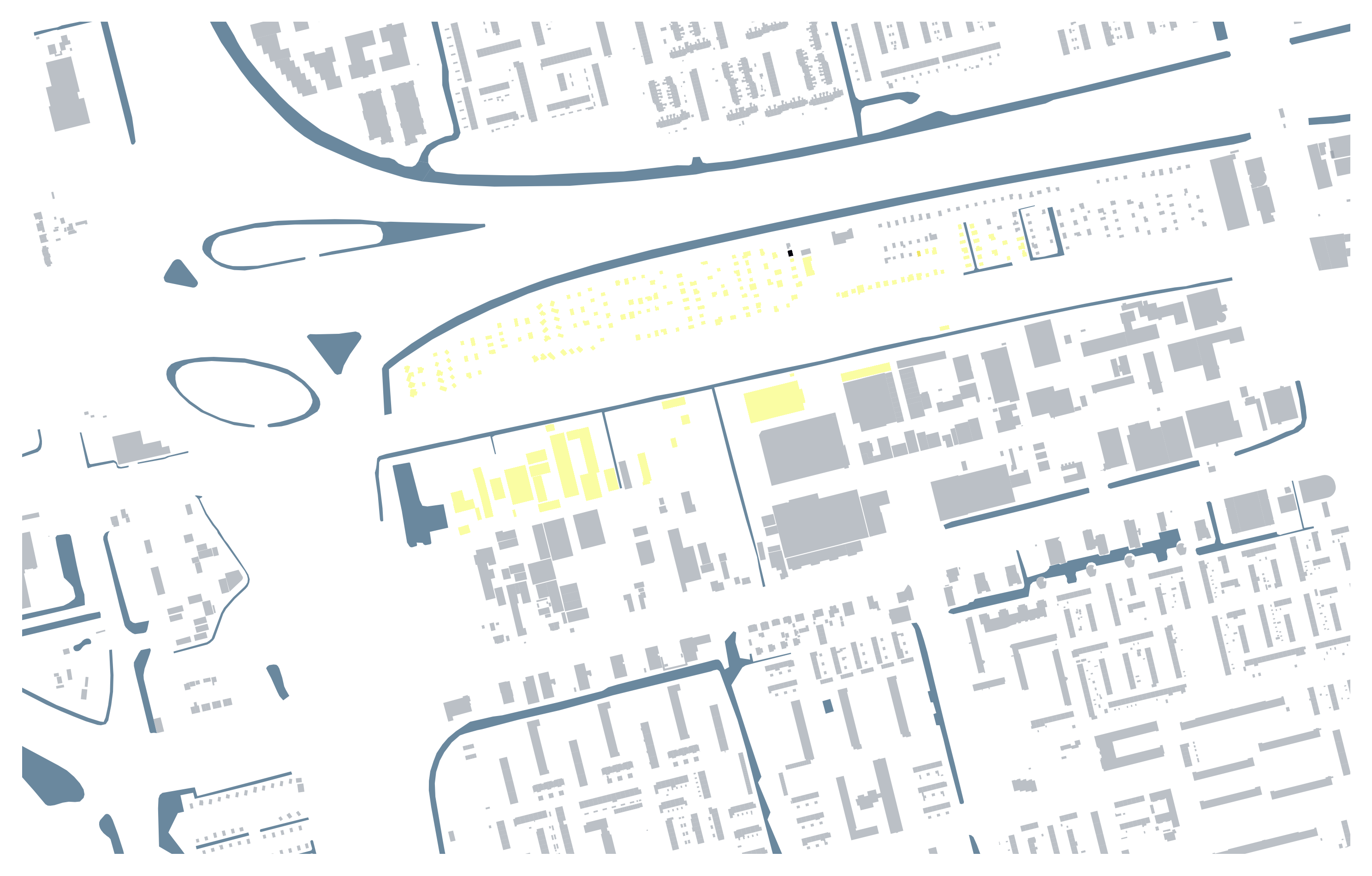
Rotterdam
221,324 buildings
Top-priority set: k = 2,213 · 1%
Unstable boundary assets: 0.01%
High probability · inside top-k
Boundary uncertainty
Low probability · outside top-k
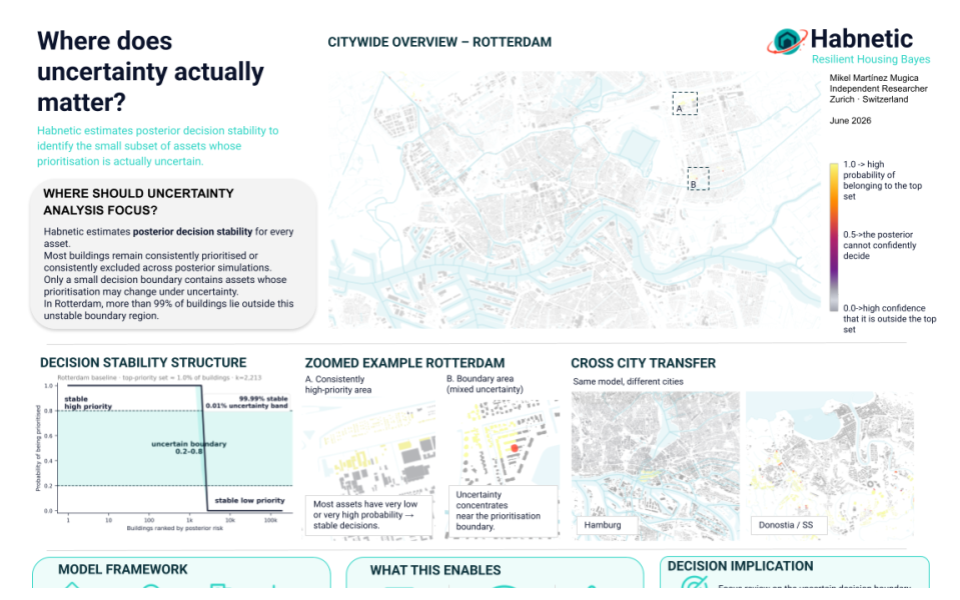
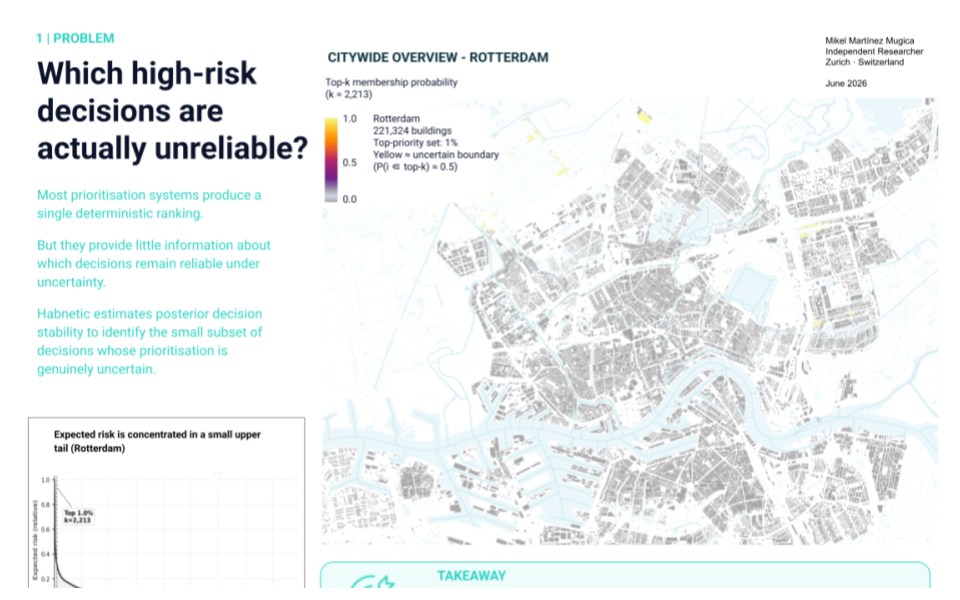
Most prioritisation decisions are already robust.
In the Rotterdam reference case study, more than 99% of buildings remain consistently inside or outside the top-priority set despite uncertainty.
Uncertainty concentrates near the prioritisation boundary.
Posterior uncertainty affects only a small subset of borderline assets rather than the entire city.
Review only the uncertain cases.
Focus expert review where posterior simulations disagree instead of revisiting every prioritisation decision.
Prioritise with confidence.
Separate consistently high-priority assets from uncertain candidates to support more reliable decision-making.
Research outputs
Explore the research
Research paper
Technical manuscript describing the method, experiments, and results.
Coming soonAbout Habnetic
Open research for uncertainty-aware urban decisions
Habnetic is an independent open-source research project developing Bayesian methods for prioritisation stability and robust prioritisation under uncertainty.
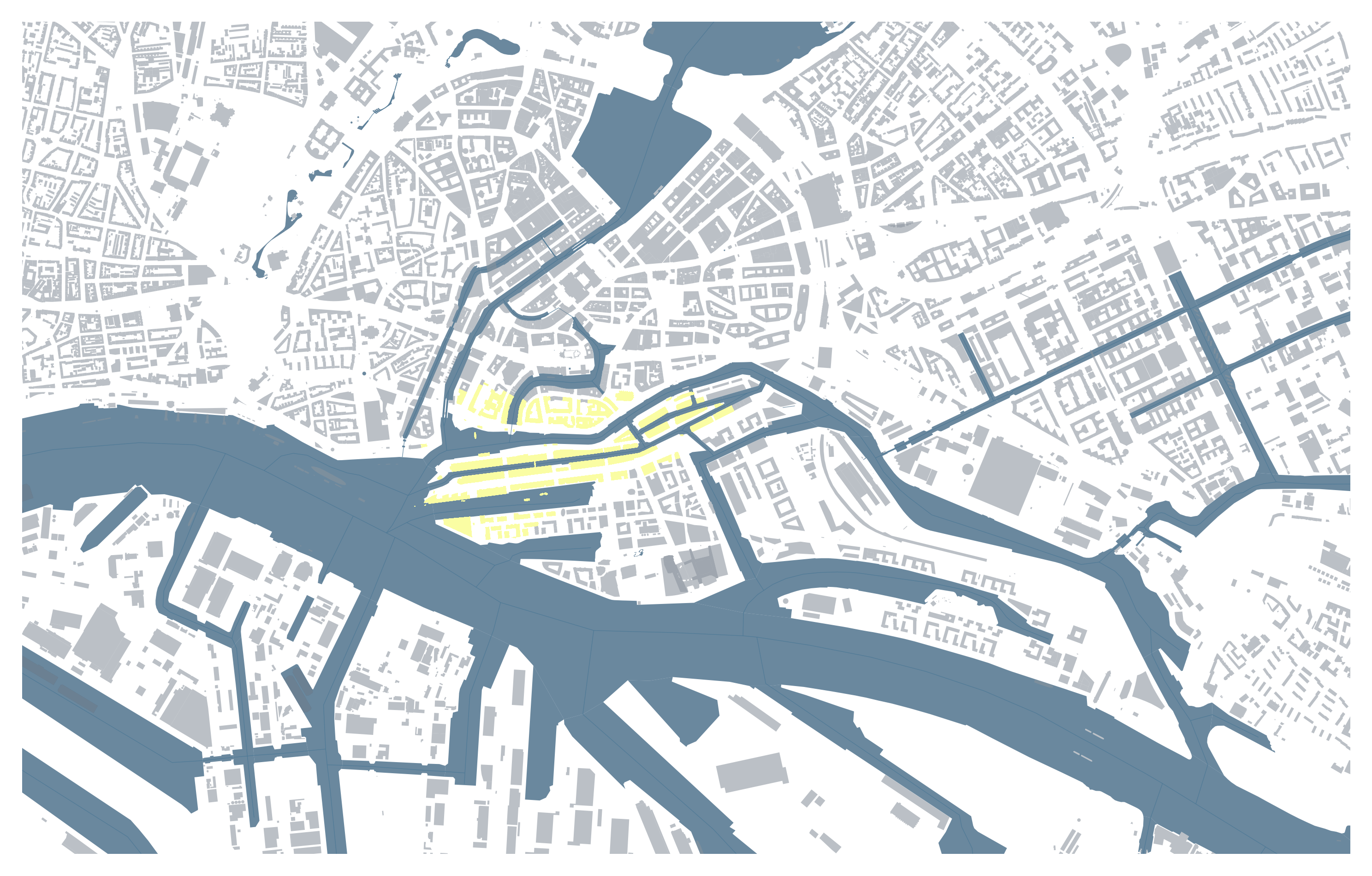
The current research evaluates the framework through urban flood prioritisation, using Rotterdam as the baseline case followed by cross-city transfer to Hamburg and Donostia-San Sebastián.
- Bayesian inference with PyMC
- Posterior predictive checks
- Cross-city transfer
- Open data and reproducible code